
With new eligibility criteria for futures and options (F&O) coming into effect, Jio Financial Services and Zomato are strong contenders for inclusion in the derivatives segment, according to an analysis by Nuvama Alternative & Quantitative Research. The report suggests that these new F&O inclusions could also propel these two companies into the benchmark National Stock Exchange Nifty 50 during the March rebalancing.

The IPO filing-to-approval lapsing ratio this year is the best in three years, underscoring the improvement in the IPO market's buoyancy.

The total number of demat accounts in the country stood at 171.1 million as of August 31.

Households are likely to remain the primary net lenders to the economy in the coming decades.

Leading brokers are expected to increase brokerage rates in the coming weeks, as they navigate a series of regulatory changes that are expected to squeeze profitability. According to industry sources, top brokers may soon begin charging for equity trades and raise the flat fees for intra-day and derivatives trading by 10-30 per cent. Several smaller players have already hiked their brokerage charges, signalling a potential end to the zero-brokerage era that has drawn millions of new investors into the stock market and fuelled active trading.

The rupee has depreciated by 0.6 per cent so far in the current financial year.
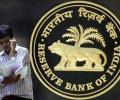
The Reserve Bank of India (RBI) has recognised the Fintech Association for Consumer Empowerment (FACE) as a self-regulatory organisation (SRO) in the fintech sector, the central bank announced on Wednesday. The banking regulator received three applications for fintech SRO. Of the remaining two applications, one has been returned by the RBI with a provision for resubmission after meeting specific requirements, while the third application is still under examination, said Governor Shaktikanta Das at the Global Fintech Fest in Mumbai.

'...you evaluate three key factors before committing your money.'

With Rs 17,087 crore raised so far this calendar year, the total is already 2.4 times that of the full year of 2023, which stood at Rs 7,266 crore.

Foreign portfolio investors (FPIs) withdrew Rs 14,790 crore ($1.8 billion) from financial stocks in the first half of August, driven by global risk aversion sparked by US recession fears. Additional factors contributing to the decline in banking stocks included subdued earnings growth in the June quarter, concerns about slowing deposit growth, and stricter liquidity norms imposed by the Reserve Bank of India.

Pre-initial public offering (IPO) allotments have lost favour amid buoyancy in the market and increase in average float size this year. After hitting a record high in 2023, they have come to a halt, with just three companies opting for such placements totalling Rs 235 crore. This compares to eight deals worth Rs 648 crore during the same period of the previous year.

So far this year, bankers have earned Rs 1,226 crore for handling 45 IPOs, which together mobilised Rs 48,363 crore.

The average cost of data breaches in India reached $2.18 million in 2023, marking a 28 per cent increase since 2020, according to the Reserve Bank of India's (RBI) Currency and Finance report for 2023-24. The report said that India's average data breach cost was still below the global average. The most common attacks in India are phishing which was at 22 per cent and stolen or compromised credentials was 16 per cent. The automotive industry is highly vulnerable to cyber attacks, whereas the banking and financial services sector, benefiting from stringent regulations, enjoys comparatively stronger protection.

The introduction of tax deducted at source (TDS) on income from central government securities and state bonds may not lead to a significant effect on retail participation, according to market participants. The Union Budget proposed that starting October 1, 2024, investors may face a 10 per cent TDS on investments in central government securities and state development loans (SDLs). "Last Budget, TDS on interest on securities was reintroduced.

Overseas fundraising by Indian firms is experiencing a robust revival in 2024, following a lacklustre 2023. This resurgence is primarily driven by strong demand for high-yield bonds from international investors amid improving liquidity conditions and reduced hedging costs. Indian companies raised ~32,619 crore through overseas bonds in the first half of 2024, surpassing the total amount raised via such instruments in the entire 2023, which stood at ~31,218 crore, according to PRIME Database. In comparison, ~45,237 crore was raised in 2022 and ~1.05 trillion was secured in 2021.

The share of equity and investment funds in the total financial wealth of households increased by more than 50% between 2011-2012 and 2022-2023.

Public-sector banks, including Canara Bank and Bank of India, are tapping the infrastructure bond market. Canara Bank on Tuesday raised Rs 10,000 crore at a coupon rate of 7.40 per cent through 10-year infrastructure bonds. This comes after SBI on July 10 raised Rs 10,000 crore also through infrastructure bonds with a 15-year tenor at a coupon rate of 7.36 per cent.

Shares of brokerages and market infrastructure institutions (MIIs) witnessed heavy selling pressure following the Securities and Exchange Board of India's (Sebi's) pivot to a uniform fee structure, which analysts fear could dent revenues. Discount brokerages, which currently benefit from a spread between client charges and exchange fees, are expected to be most affected. Shares of Angel One, the third-largest brokerage by active clients, fell 8.7 per cent. Groww and Zerodha, the largest brokerages, are not publicly listed.

In June, Sensex went up 6.6% and Nifty 6.9%, their best monthly gains since December 2023.

'This trend will continue as long as the bull run continues.'
 © 2026 Rediff.com - Investor Information - Advertise with us - Disclaimer - Privacy Policy - Sitemap - Feedback - About us - Terms of use - Grievances